

Peking Duck, a dish with origins dating back to the Yuan Dynasty, represents a cornerstone of Chinese culinary heritage. Its preparation is a meticulous art form, reflecting centuries of refinement. As you embark on the journey of creating authentic Peking Duck, you are participating in a tradition that has graced imperial banquets and delighted countless diners. This article will guide you through the intricate steps of preparing this revered delicacy, offering insights into its key components, historical context, and regional nuances.
Understanding the Foundation: The Duck and Its Preparation
The selection and initial preparation of the duck are paramount to the success of your Peking Duck. Think of the duck as a canvas; its quality directly influences the masterpiece you create.

Choosing the Right Duck
For an authentic experience, you require a specific type of duck. Traditionally, the Pekin duck, also known as the American Pekin, is preferred. This breed is renowned for its plump body, rich flavor, and relatively thin skin, which crisps beautifully during the roasting process. When you select your duck, look for one that weighs between 2.5 to 3 kilograms (5.5 to 6.6 pounds). Ensure it is fresh, with intact skin and no signs of freezer burn if purchased frozen. Often, you can find specialty ducks at Asian markets or directly from poultry farms.
The Air-Drying Process: A Crucial Step
The unparalleled crispiness of Peking Duck skin is not accidental; it is the result of a deliberate and extended air-drying process. This step is non-negotiable.


Authentic Peking Duck Recipe: A Delicious Chinese Delicacy
Peking Duck (北京烤鸭) is one of the most iconic dishes in Chinese cuisine, named after the city where it originated several centuries ago (Peking is an older form of Beijing/北京). The dish includes several components: thin slices of roast duck with crispy skin and juicy meat, delicate pancakes, a flavorful sauce, and julienned vegetables. These ingredients are combined into a roll to be enjoyed.
4
servings30
minutes40
minutes300
kcal12
hours13
hours10
minutesKeep the screen of your device on

Ingredients
5.5 lb 5.5 duck
- Internal Marinade
2 Tbsp 2 Shaoxing wine (or dry sherry)
1 Tbsp 1 light soy sauce
1 Tbsp 1 dark soy sauce
1 Tbsp 1 Hoisin Sauce
1 tsp 1 five-spice powder
1 tsp 1 ginger, grated
1 clove 1 Garlic. minced
1/2 tsp 1/2 white pepper
1/2 tsp 1/2 salt
- Skin Glaze
1/2 cup 1/2 maltose
1/2 cup 1/2 hot water
2 Tbsp 2 red wine vinegar
1 Tbsp 1 Shaoxing wine
1 tsp 1 dark soy sauce
- Mandarin Pancakes (Bāo Bǐng)
2 cups 2 all-purpose flour
3/4 cup 3/4 boiling water
1 Tbsp 1 Cooking Oil
- Hoisin Sauce
1/4 cup 1/4 fermented soybean paste (tianmianjiang)
2 Tbsp 2 Sugar
1 Tbsp 1 white vinegar
1 Tbsp 1 Sesame Oil
1 Tbsp 1 dark soy sauce
1 clove 1 garlic, minced
pinch pinch five-spice powder
3 Tbsp 3 Water
- To Serve
1 bunch 1 scallions
1 1 Cucumber

Directions
- Cleaning The duck.
Begin by thoroughly cleaning the duck. Remove any remaining feathers and pinfeathers. You can use tweezers for this. Discard the giblets and trim any excess fat from the neck and cavity. Rinse the duck thoroughly inside and out with cold water, ensuring no blood or debris remains. Pat the duck dry with paper towels until the skin is completely free of moisture. - Inflating the duck
This technique is the hallmark of authentic Peking Duck preparation. You can use a bicycle pump with the needle attachment to inflate the duck. Or you can carefully separate the skin from the flesh by running your fingers under the skin. If using the bicycle pump carefully insert the needle under the neck skin, being mindful not to puncture the flesh. Inflate the duck until the skin separates from the meat, creating a balloon-like appearance. This separation allows for even heat distribution during roasting and contributes significantly to the skin’s crispiness. - Scald Duck Skin.
Bring about 1½ liters of water (about 6 cups) to a boil, then gently pour it over the entire duck skin (remember to flip over and do the other side). You can use a deep tray to collect the water, or do it inside a sink. - Prepare the Skin Glaze
In a saucepan, gently heat the maltose with hot water until it dissolves completely. Remove from heat and stir in the red wine vinegar, Shaoxing wine, and dark soy sauce. Allow the glaze to cool slightly. You will use a pastry brush to evenly coat the entire exterior of the duck and will need to apply several thin layers. The first layer is applied once the duck is dry from scalding (which is almost instantly). Allow at least 8 hours before applying the next coating (during the hanging/refrigeration – step. 5). Now apply another coat every 30 minutes This multi-layered approach builds up a beautiful, glossy finish and contributes significantly to the skin’s texture. You can apply 3 to 5 layers of glaze for optimal results. - Hang the Duck / Refrigerate the Duck.
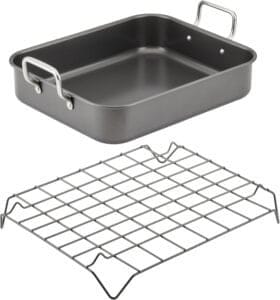
Once inflated, you will need to hang the duck in a cool, well-ventilated area. A meat hook is ideal for this purpose. If you lack a dedicated hanging space, you can improvise by placing it on a wire cooling rack inside a roasting pan in the refrigerator (uncovered). The goal is to allow the skin to dry out completely, which typically takes 12 to 24 hours. The longer the drying time, the crispier the skin will be. During this period, the skin will shrink and tighten. It is during this drying time that you add the 2nd – 5th coating of the skin glaze. With each layer of glaze it will begin developing its characteristic sheen. - Create and add the internal marinade.
Combine all ingredients in a bowl and mix well. One hour before roasting, take the duck out of the fridge to bring it back to room temperature. Using a small spoon, distribute the marinade evenly inside the duck. Seal the cavity opening with bamboo skewers to prevent the marinade from leaking during roasting. Don’t let the marinade lek onto your perfectly dried and glazed duck skin! - Roast the duck.
Preheat the oven to 200°C/390°F (fan assisted) and 220°C/425°F for conventional oven. Roast the duck for the first 30 minutes at 200°C/390°F. After 30 minutes, decrease the oven temperature to 160°C /320°F (or 180°C/350°F for conventional oven). Continue roasting for another 1 to 1.5 hours, or until an internal temperature of 74°C (165°F) is reached in the thickest part of the thigh, avoiding the bone. During the last 20 minutes, you can increase the oven temperature again to 200°C/390°F (220°C/425°F for conventional oven) to further crisp the skin, but watch it carefully to prevent burning. If the skin or wing tips are browning too quickly, you can loosely tent the bird or wrap the wing tips with aluminum foil. - Resting and Carving
Once roasted, remove the duck from the oven and let it rest, uncovered, for at least 15-20 minutes. This allows the juices to redistribute throughout the meat, ensuring it remains tender and moist. Resting is as crucial as any other step. To carve you will need a very sharp carving knife. Begin by carefully separating the crispy skin from the meat, then slice the skin into small, bite-sized pieces. Next, carve the meat into very thin slices, keeping the skin and meat relatively separate for serving. - Mandarin Pancakes
Place flour in a large bowl. Gradually pour in boiling water, mixing with chopsticks until a shaggy dough forms. Knead for 5-7 minutes until smooth and elastic. Cover with a damp cloth and let rest for 30 minutes. Divide the dough into small, equal portions (about 20-25 balls). Roll each ball into a thin round disc. Brush one side of a round disc with oil and place another round on top, oiled side down. Roll the double stack into an even thinner, larger circle. Heat a dry, non-stick pan over medium heat. Cook each double stack pancake for 30-60 seconds per side until lightly browned and puffy. Separate the two pancakes while hot. Keep warm in a steamer basket or wrapped in a damp cloth. - Create Hoisin Sauce
Combine fermented soybean paste (tianmianjiang), white vinegar, sugar, sesame oil, dark soy sauce, garlic, five-spice powder and 2 Tbsp water in a small saucepan and gently heat over low heat, stirring constantly, until the sugar dissolves and the sauce thickens slightly. Add final 1 Tbsp water (or more) if needed to reach desired consistency. - Julienne the scallions and cucumber
Slice the white and light green parts of scallions into thin, matchstick-sized pieces (julienne). Similarly, peel a cucumber, remove the seeds if desired, and julienne it into thin strips. Arrange them attractively on a platter alongside the duck. - How to assemble
Each person takes a pancake, spread a little hoisin sauce over the pancake, add some duck meat, duck skin, scallions and cucumber in the middle. Wrap up into a cylinder and enjoy. Delicious. - If the pancakes need heating wrap them in a damp cloth and microwave for no more than 20 seconds, remove from cloth and add to platter. Place the duck, scallions, cucumber, hoisin sauce and mandarin pancakes on a serving platter and watch as people melt into this incredible Peking duck. It truly is worth the effort.


Equipment
Notes
- It’s preferable to use maltose (Mai Ya Tang, 麦芽糖), but if you can’t find it, you can substitute with honey. When doing so, combine 2 parts honey with 1 part hot water.
- Roasting time can differ based on the size of your duck and how your oven performs. Keep an eye on it and check regularly. Make adjustments as needed.
- If you are not a fan of hoisin sauce you can substitute with store bought “plum sauce” or traditional “Sweet bean sauce.”
- If you don’t have the time or inclination to make the Mandarin pancakes from scratch you can buy them from most Asian food stores
Nutrition Facts
- Serving Size: 1 serving
- Total number of serves: 4
- Calories: 1144kcal
- Fat: 256.4g
- Saturated Fat: 84g
- Cholesterol: 474mg
- Sodium: 2852mg
- Potassium: 1718mg
- Carbohydrates: 110.5g
- Fiber: 5.7g
- Sugar: 12.3g
- Protein: 87.9g
- Vitamin A: 133.9mcg
- Vitamin C: 22.8mg
- Calcium: 135mg
- Iron: 19mg
- Vitamin D: 4.4mcg
- Vitamin E: 5.1mg
- Vitamin K: 60.4mcg
- Thiamin: 1.9mg
- Riboflavin: 1.8mg
- Niacin: 30.7mg
- Vitamin B6: 1.3mg
- Vitamin B12: 1.6mcg
- Folate: 225mcg
- Pantothenic Acid: 6.5mg
- Phosphorus: 1006mg
- Magnesium: 136mg
- Zinc: 10mg
- Selenium: 100.5mcg
- Copper: 1.7mg
- Manganese: 0.9mg
Did you make this recipe?
Leave a rating and tell me how it turned out in the comments.
Did you make this recipe? We’d love to see it!
Tag @healthynatured on Instagram and add the hashtag#asiaflavor
Like this recipe?
Follow @healthynatured on Pinterest
Join us on Facebook!
Follow Taste of Asia Flavor on Facebook
Crafting the Flavor Profile: The Marinades and Glazes
The flavor of Peking Duck is not solely derived from the duck itself, but intricately woven through a series of marinades and glazes. These layers of flavor are what elevate the dish from a simple roasted duck to a culinary marvel.

The Internal Marinade
While the skin is drying, you will prepare an internal marinade. This mixture infuses the meat with aromatic flavors that complement the richness of the duck.
The Skin Glaze: Achieving the Signature Color and Crispness
The iconic reddish-brown color and unparalleled crispiness of Peking Duck skin are achieved through a specialized glaze. This glaze is applied in multiple layers.
The Art of Roasting: From Oven to Table
The roasting process is where all your careful preparation culminates. It involves precise temperature control and strategic placement to achieve that perfectly crispy skin and succulent meat.

Roasting Setup: Vertical or Horizontal?
Traditionally, Peking Duck is roasted in a suspended vertical position in a specialized oven, allowing fat to drip away and heat to circulate evenly. However, for a home kitchen, you will likely adapt to a conventional oven.
The Carving Ceremony
Carving Peking Duck is an art form in itself. The goal is to carve thin slices of crispy skin with a small amount of meat attached. You will need a very sharp carving knife. Begin by carefully separating the crispy skin from the meat, then slice the skin into small, bite-sized pieces. Next, carve the meat in thin slices, keeping the skin and meat relatively separate for serving. The presentation should prioritize showcasing the contrasting textures.
The Accompaniments: Completing the Ensemble
Peking Duck is rarely served in isolation. Its true magic lies in the traditional accompaniments that provide a delightful interplay of flavors and textures. Imagine these as the supporting cast, each playing a vital role in enhancing the main performance.

Mandarin Pancakes (Bāo Bǐng) – Authentic Peking Duck Recipe
These thin, delicate, steamed pancakes serve as the primary wrapper for the duck. They are soft and pliable, providing a neutral backdrop that allows the duck’s rich flavors to shine.
Hoisin Sauce: The Sweet and Savory Counterpoint
Hoisin sauce is an indispensable condiment for Peking Duck. Its sweet, savory, and slightly tangy profile perfectly complements the richness of the duck. Commercial hoisin sauce is widely available, but you can also make your own for a fresher taste.
Julienne Scallions and Cucumber
These fresh, crisp vegetables offer a refreshing counterpoint to the rich duck and sweet sauce. Their clean flavors and textural crunch are essential for balancing the dish.

Regional Variations and Modern Interpretations
While the core principles of Peking Duck remain consistent, subtle regional variations and modern interpretations exist, reflecting evolving culinary trends and local preferences. Think of the authentic recipe as a strong foundation upon which creative variations can be built.
Beijing vs. Other Regions
The truly authentic “Peking Duck” originates from Beijing, where the emphasis is on the extremely crisp skin and precise carving technique. You will find that Beijing restaurants often serve the crispy skin separately, sometimes dipped in sugar, before presenting the meat.
Cantonese Roasted Duck (Siu Aap)
In Cantonese cuisine, a similar dish known as “Siu Aap” (燒鴨) is popular. While also roasted, a key difference lies in the marinade, which often includes star anise, cinnamon, and sometimes even tangerine peel. The skin, while crispy, might not reach the same extreme crispness as traditional Peking Duck, and the meat is typically served with a gravy made from the pan drippings, which is less common with authentic Peking Duck.
Modern Adaptations
Contemporary chefs continue to innovate with Peking Duck, exploring different cooking methods and serving styles. Some restaurants use convection ovens or even rotisseries to achieve desired textures. Fusion variations might incorporate different flavor profiles into the marinade or introduce unconventional accompaniments. However, the essence of the dish – crispy skin, tender meat, and complementary condiments – generally remains. Some chefs might even use sous vide methods for the meat before a final high-heat roast for the skin, aiming for even greater precision in texture.
A Culinary Journey Worth Taking
Preparing authentic Peking Duck is an undertaking that demands patience, precision, and respect for tradition. It is not merely a recipe; it is a culinary ritual. As you navigate each step, from selecting the perfect duck to the final act of carving, you will gain a deeper appreciation for the artistry and heritage behind this magnificent dish. The reward for your endeavors will be a truly unforgettable dining experience, a testament to your skill and a celebration of one of the world’s most cherished delicacies. Enjoy the journey, and savor the exceptional results.

Authentic Peking Duck Recipe FAQs
What are the main ingredients needed for a traditional Peking duck recipe?
The main ingredients for an authentic Peking duck recipe include a whole duck, maltose or honey for glazing, Chinese five-spice powder, soy sauce, hoisin sauce, scallions, cucumbers, and Mandarin pancakes or thin wheat pancakes for serving.
How is the duck prepared before cooking in a Peking duck recipe?
The duck is first cleaned and air is pumped between the skin and the meat to separate them, which helps achieve crispy skin. It is then blanched in boiling water, glazed with a maltose or honey mixture, and hung to dry for several hours or overnight before roasting.
What is the traditional cooking method for Peking duck?
Traditionally, Peking duck is roasted in a special wood-fired oven at high heat. The duck is hung inside the oven to allow the fat to render and the skin to become crispy. Modern recipes may use a conventional oven but aim to replicate the crispy skin and tender meat.
How is Peking duck typically served?
Peking duck is usually carved tableside, with the crispy skin served first, followed by the meat. It is served with thin pancakes, hoisin sauce, and garnishes such as sliced scallions and cucumbers, allowing diners to assemble their own wraps.
Can Peking duck be made at home, and how long does it take?
Yes, Peking duck can be made at home, but it requires preparation time including drying the duck for several hours or overnight and roasting it properly. The entire process can take a full day or more, depending on the recipe and drying time.


%20is%20one%20of%20the%20most%20iconic%20dishes%20in%20Chinese%20cuisine,%20named%20after%20the%20city%20where%20it%20originated%20several%20centuries%20ago%20(Peking%20is%20an%20older%20form%20of%20Beijing/%E5%8C%97%E4%BA%AC).%20The%20dish%20includes%20several%20components:%20thin%20slices%20of%20roast%20duck%20with%20crispy%20skin%20and%20juicy%20meat,%20delicate%20pancakes,%20a%20flavorful%20sauce,%20and%20julienned%20vegetables.%20These%20ingredients%20are%20combined%20into%20a%20roll%20to%20be%20enjoyed.)
You must try this recipe – you’ll love it