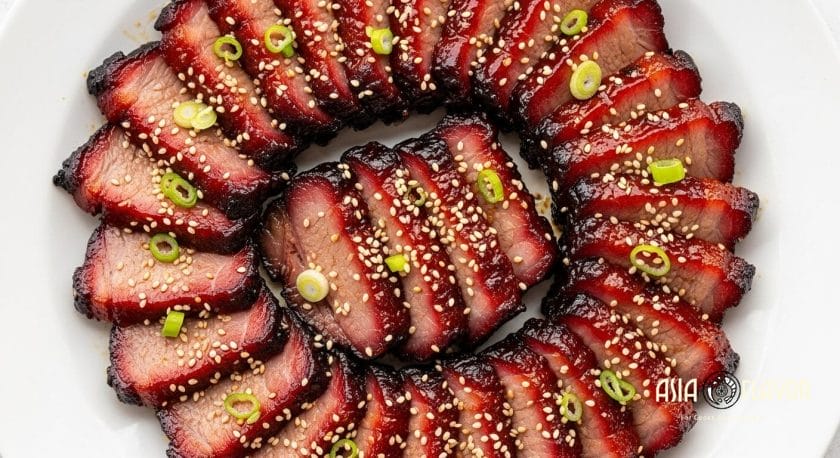
Char Siu, literally meaning “fork roasted,” is a quintessential staple of Cantonese cuisine, renowned for its glossy, ruby-red exterior, succulent interior, and complex interplay of sweet and savory flavors. This article will guide you through the process of preparing this iconic dish in your own kitchen, demystifying the techniques and ingredients that contribute to its distinctive character. You will discover the foundational elements of a remarkable Char Siu BBQ Pork, explore suitable accompaniments, and gain insight into its regional nuances.
Understanding the Essence: Key Ingredients for Superior Char Siu BBQ Pork
The success of your Char Siu BBQ Pork hinges on the quality and appropriate selection of its core components. While the recipe might appear straightforward, each ingredient plays a crucial role in achieving the desired taste and texture. Consider these elements not merely as items on a shopping list, but as individual brushstrokes contributing to a culinary masterpiece.
The Foundation: Choosing the Right Cut of Pork
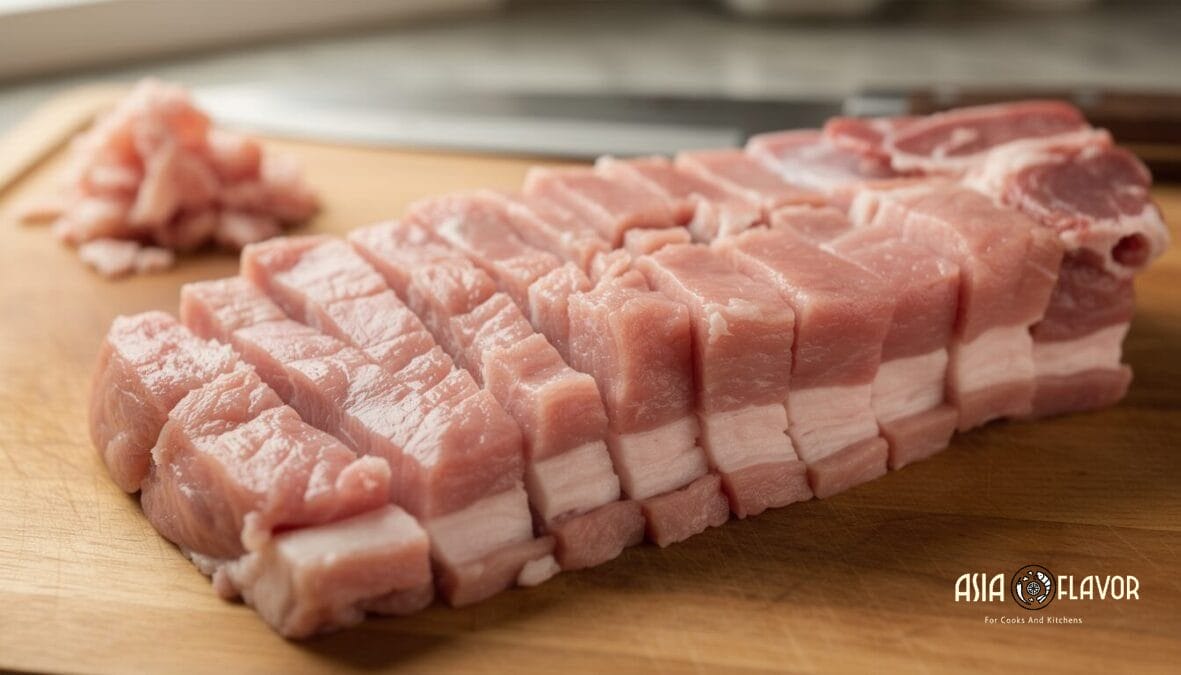
The cut of pork is paramount. Traditionally, pork butt (also known as Boston butt or pork shoulder) is preferred due to its balanced fat-to-meat ratio. This marbling is vital; lean cuts will result in dry, unappetizing Char Siu. The fat renders during cooking, basting the meat from within and contributing to its juiciness and tender texture.
Alternatively, pork belly can be used for a richer, more decadent experience, though it requires careful management to prevent excessive greasiness. Some variations utilize pork loin, but this demands a shorter cooking time and careful attention to avoid overcooking and subsequent dryness. When selecting your pork, look for cuts with visible intramuscular fat streaks, signaling potential tenderness and flavor. Aim for pieces that are relatively uniform in thickness, which promotes even cooking.
The Flavor Catalyst: Mastering the Char Siu BBQ Pork Marinade
The marinade is the heart and soul of Char Siu BBQ Pork, imparting its signature flavor and vibrant color. This complex blend is more than just a seasoning; it’s a transformative elixir.
- Hoisin Sauce: This thick, dark brown, and often sweet-savory sauce forms the backbone of most Char Siu marinades. Its deep umami flavor and slightly fermented notes are indispensable.
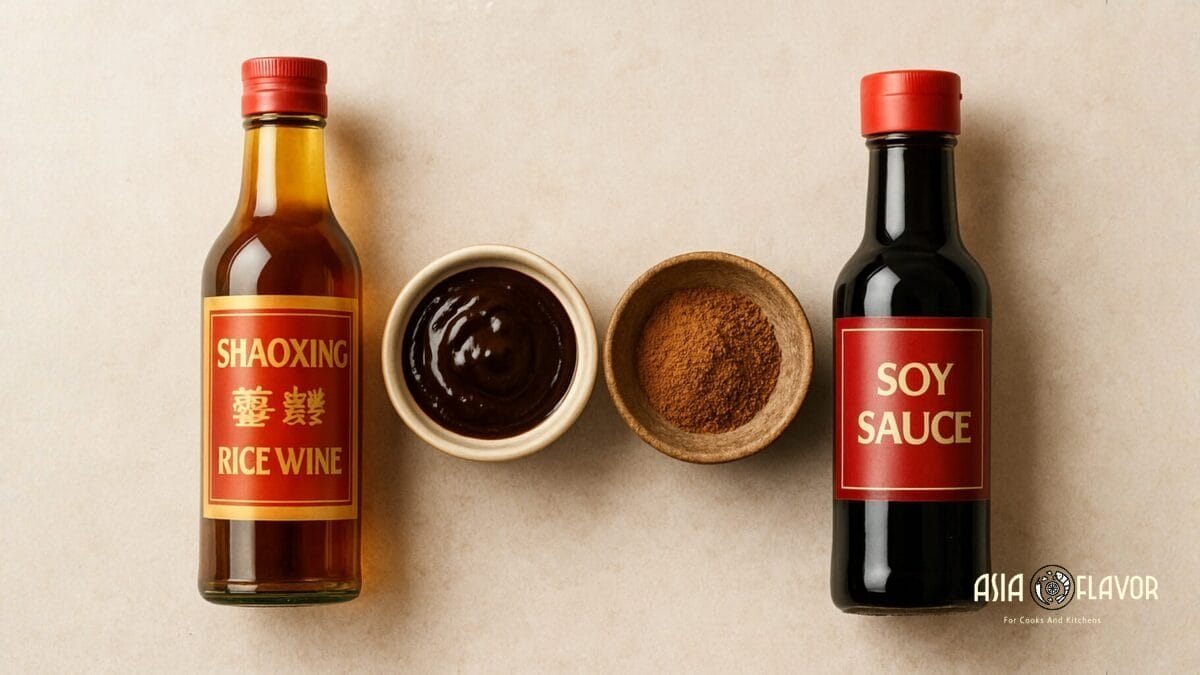
- Soy Sauce (Light and Dark): You will typically use both light and dark soy sauce. Light soy sauce provides salinity and umami without significantly altering the color, while dark soy sauce, with its thicker consistency and slight sweetness, contributes to the deep reddish-brown hue and a more robust flavor profile. Think of them as complementary shades on a painter’s palette.
- Honey or Maltose: These sweeteners are crucial for achieving the characteristic glaze and promoting the caramelization that gives Char Siu its slightly sticky, burnished exterior. Maltose, a less sweet sugar than honey, offers a more subtle caramel note and a thicker consistency, leading to a more pronounced glaze. If using honey, be mindful of its more aggressive sweetness and adjust accordingly.
- Shaoxing Wine: This Chinese rice wine adds a nuanced depth of flavor and helps to tenderize the meat. It introduces a delicate, complex aroma that cannot be replicated by other alcohols.
- Five-Spice Powder: A pungent and aromatic blend typically comprising star anise, cloves, Chinese cinnamon, Szechuan peppercorns, and fennel seeds. This spice blend contributes to the exotic and fragrant profile of Char Siu, providing warmth and complexity. Use it judiciously, as its strong fragrance can overpower other flavors if used excessively.
- Red Fermented Bean Curd (Optional but Recommended): This ingredient, often called “nam yue” or “fu ru,” is the secret weapon for achieving the vibrant, natural red hue of authentic Char Siu. It also imparts a subtle umami flavor. While not strictly essential, its inclusion elevates the visual appeal and depth of taste.
- Garlic and Ginger: Freshly minced garlic and grated ginger contribute aromatic warmth and pungency, providing a foundational layer of flavor that complements the other ingredients.
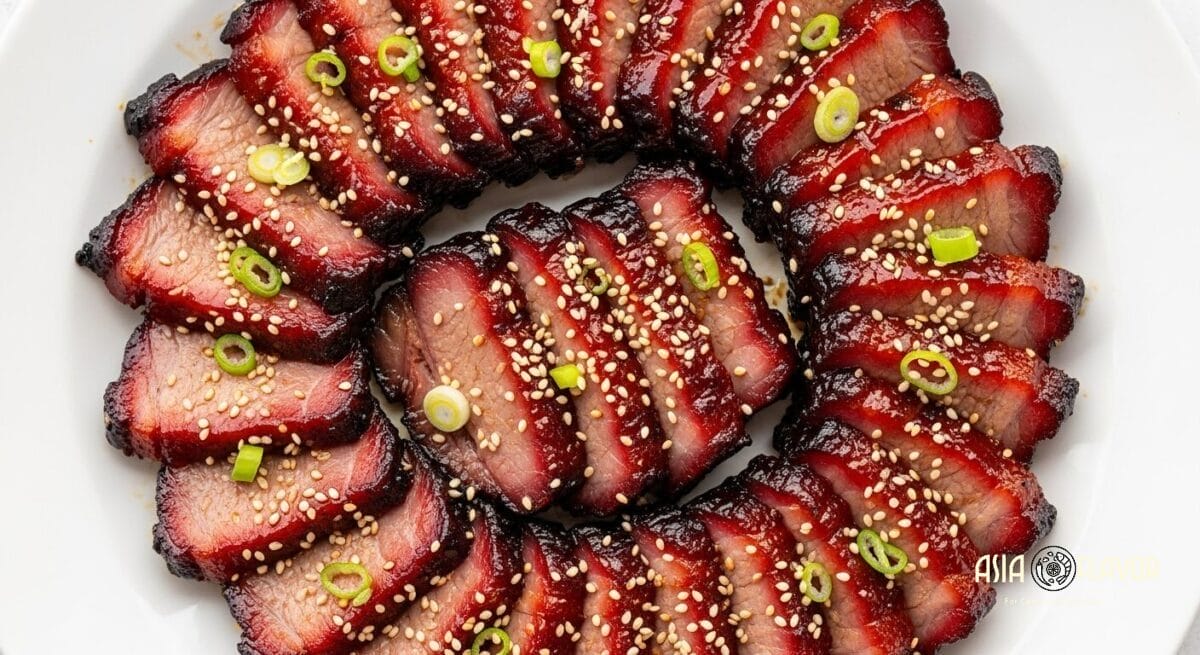
The Char Siu BBQ Pork Glaze: A Final Flourish
The final glaze, often applied towards the end of cooking, enhances the visual appeal and adds a glistening, slightly sweet, and sticky finish. A simple mixture of honey and a touch of the reserved marinade (boiled to ensure food safety) is commonly used. Some recipes might incorporate a small amount of sesame oil for added aroma and shine.
Mastering the Technique: Crafting Your Own Char Siu BBQ Pork
The process of making Char Siu is a blend of patience and precision. Each step contributes to the ultimate succulence and flavor of the finished product. Imagine yourself as an artisan, carefully honing each stage to perfection.
Preparation: The Marinade and Pork
- Prepare the Pork: Begin by trimming any excessive fat or silver skin from your chosen pork cut. Cut the pork into long, relatively thick strips, approximately 1.5 to 2 inches thick and 6 to 8 inches long. This size allows for even cooking and ensures each piece develops a good crust while remaining juicy.
- Combine Marinade Ingredients: In a large bowl, whisk together all the marinade ingredients: hoisin sauce, light soy sauce, dark soy sauce, honey (or maltose), Shaoxing wine, five-spice powder, minced garlic, grated ginger, and red fermented bean curd (if using). Ensure all ingredients are well combined, forming a cohesive, aromatic paste.
- Marinate the Pork: Add the pork strips to the marinade, ensuring every piece is thoroughly coated. Use your hands to massage the marinade into the meat. Cover the bowl tightly with plastic wrap and refrigerate for a minimum of 6 hours, but ideally overnight (12-24 hours). The longer marination time allows the flavors to deeply penetrate the meat, resulting in a more profound and tender product. This is not a step to rush; patience here translates directly to superior flavor.
Cooking: The Transformation
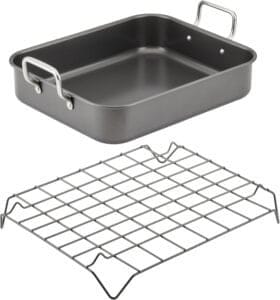
- Preheat Oven: Preheat your oven to 200°C (400°F). Line a baking sheet with foil for easy cleanup, and place a wire rack on top. This setup allows air to circulate around the pork, promoting even cooking and caramelization.
- Arrange Pork: Remove the pork from the marinade, allowing any excess marinade to drip off. Reserve the remaining marinade. Arrange the marinated pork strips on the wire rack, ensuring there is space between each piece for even heat distribution.
- Initial Roasting: Roast the pork for 20-25 minutes. During this initial phase, the heat begins to cook the meat and initiate the browning process.
- Basting and Turning: Reduce the oven temperature to 180°C (350°F). Baste the pork liberally with the reserved marinade. Flip the pork strips and baste the other side. Continue roasting, basting and flipping every 10-15 minutes, for another 30-40 minutes, or until the pork is cooked through and has developed a beautiful, caramelized crust. The internal temperature of the pork should reach 63°C (145°F).
- The Glaze: In the last 10-15 minutes of cooking, brush the pork with a mixture of honey (or diluted maltose) with a small amount of the cooked-down reserved marinade (boiled for 2 minutes to ensure safety). This final basting creates the signature glossy, slightly sticky glaze. Be mindful to watch for burning during this stage due to the sugar content.
- Resting: Once cooked, remove the Char Siu from the oven and let it rest on a cutting board for 10-15 minutes before slicing. Resting allows the juices to redistribute throughout the meat, resulting in a more tender and juicy final product. Slicing immediately will cause the juices to run out, leading to a drier result.
Slicing and Serving
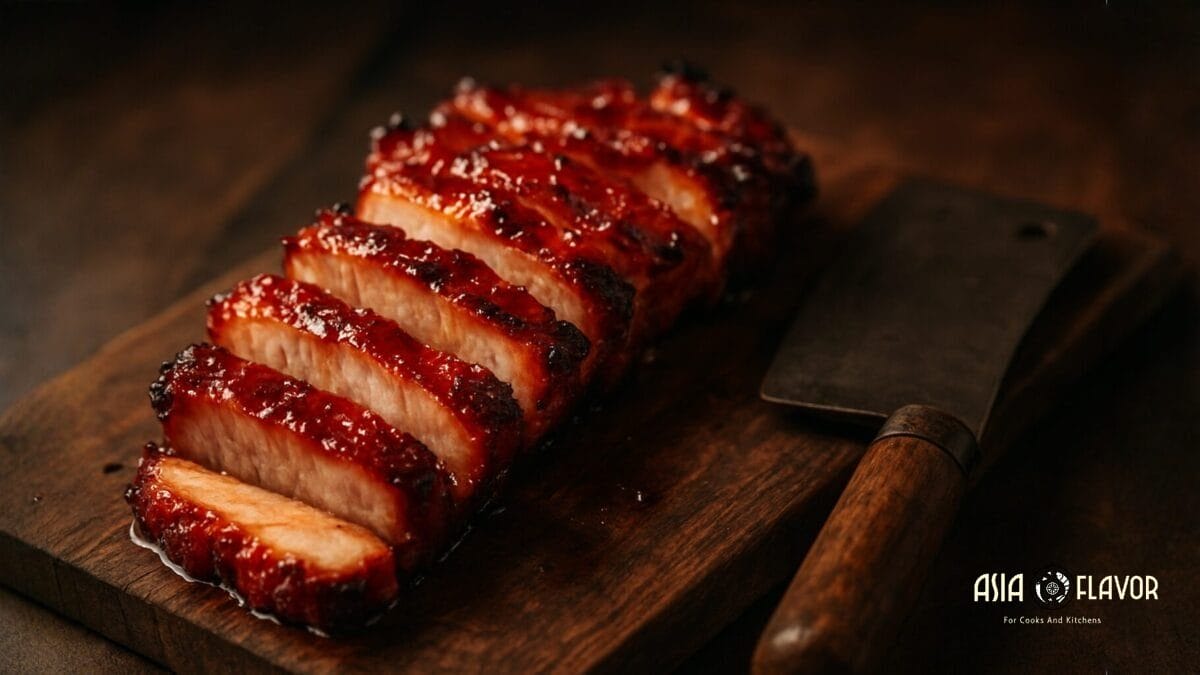
Slice the Char Siu against the grain into thin, bite-sized pieces. The diagonal cut enhances tenderness and exposes the beautiful layers of meat and fat. Serve immediately.
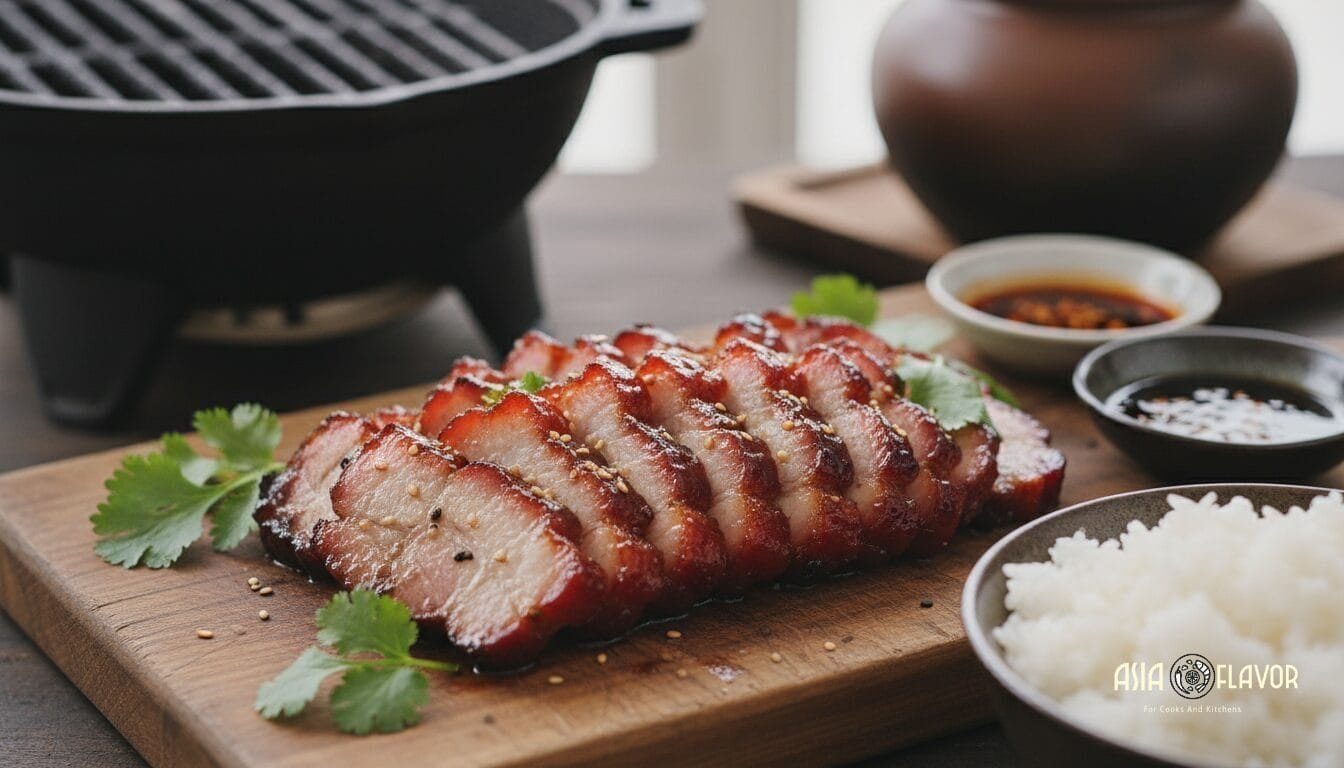


Delicious Char Siu BBQ Pork Recipe
Sweet and savory Chinese BBQ pork that’s perfect for any meal.
8
servings20
minutes50
minutes350
1
hour10
minutesKeep the screen of your device on

Ingredients
3 pounds 1.36 kg pork shoulder / pork butt
1/4 cup 50 g sugar
2 tsp 2 tsp salt
1 tsp 1 tsp Chinese five spice powder
1/4 tsp 1/4 tsp white pepper
1 tsp 1 tsp sesame oil
1 Tablespoon 1 tbsp Shaoxing rice wine
3 tablespoons 3 tbsp hoisin sauce
2 tablespoons 2 tbsp soy sauce
2 tablespoons 2 tbsp honey
2 tablespoons 2 tbsp molasses
2 cloves 2 cloves garlic, minced
1/2 tsp 1/2 tsp red food coloring (optional)
1 tablespoon 1 tbsp hot water

Directions
- Cut the pork into long strips or chunks about 2 to 3 inches thick. Don’t trim any excess fat, as it will render off and add flavor.

- In a bowl, mix together the sugar, salt, five spice powder, white pepper, sesame oil, wine, soy sauce, hoisin sauce, molasses, honey, food coloring (if using), and garlic to create the marinade (the BBQ sauce).
- Set aside roughly 2 tablespoons of the marinade. Use the remaining marinade to coat the pork in a large bowl or baking dish. Cover and refrigerate for at least 8 hours, preferably overnight. Keep the reserved marinade covered and stored in the fridge too.

- Remove the pork from the fridge and let rest for an hour. Preheat your oven to 425°F (218°C). Line the bottom of a baking pan with aluminum foil for easier cleanup, then set the baking rack on top. Using tongs, arrange the pork on the rack and pan. Pour 1 to 2 tablespoons of water into the bottom of the pan to create steam during cooking and to keep the drippings from burning and smoking. Place the pan carefully into the oven.
- We’ll be taking the char siu out periodically to baste it again, this is where you use the leftover pork marinade. If you run out you can use honey (3 tbsp) mixed with water (3 tsp). Cook for 15 minutes, then baste both sides with the pork marinade.
- Cook for another 15 minutes and baste both sides again with the pork marinade. Cook for 10 minutes, then baste both sides with the diluted honey. Finally, increase the heat to 450°F, cook for 5 more minutes, baste both sides with honey, and let it rest for a few minutes before slicing. If it’s not caramelized to your liking, you can turn the broiler on for a couple minutes to crisp the outside and add some color/flavor. Be sure not to walk away during this process, since the sweet char siu BBQ sauce can burn if left unattended. Altogether, the whole process (step 5 and 6) takes about 50 minutes in the oven.
- Remove from the oven and baste with the last bit of reserved marinade or honey/water solution. Let the meat rest for 10 minutes before slicing, and enjoy!



Notes
- Prep time does not include overnight marinating time.
- Add up to 2 Tbsp additional wine if you prefer a more tart glaze
- Add 1 tsp chili flakes to the glaze for a spicy bite
Nutrition Facts
- Serving Size: 1 g
- Total number of serves: 4
- Calories: 350kcal
- Fat: 15g
- Saturated Fat: 5g
- Trans Fat: 0g
- Polyunsaturated Fat: 2g
- Monounsaturated Fat: 7g
- Cholesterol: 30mg
- Sodium: 250mg
- Potassium: 400mg
- Carbohydrates: 45g
- Net Carbs: 40g
- Fiber: 5g
- Sugar: 10g
- Protein: 10g
- Vitamin A: 700mcg
- Vitamin C: 30mg
- Calcium: 150mg
- Iron: 2mg
- Vitamin D: 2mcg
- Vitamin E: 5mg
- Vitamin K: 50mcg
- Thiamin: 0.3mg
- Riboflavin: 0.4mg
- Niacin: 5mg
- Vitamin B6: 0.5mg
- Vitamin B12: 1mcg
- Folate: 100mcg
- Biotin: 30mcg
- Pantothenic Acid: 2mg
- Phosphorus: 200mg
- Iodine: 60mcg
- Magnesium: 50mg
- Zinc: 3mg
- Selenium: 20mcg
- Copper: 0.5mg
- Manganese: 1.2mg
- Chromium: 25mcg
- Molybdenum: 45mcg
- Chloride: 300mg
Did you make this recipe?
Leave a rating and tell me how it turned out in the comments.
Did you make this recipe? We’d love to see it!
Tag @healthynatured on Instagram and add the hashtag#asiaflavor
Like this recipe?
Follow @healthynatured on Pinterest
Join us on Facebook!
Follow Taste of Asia Flavor on Facebook
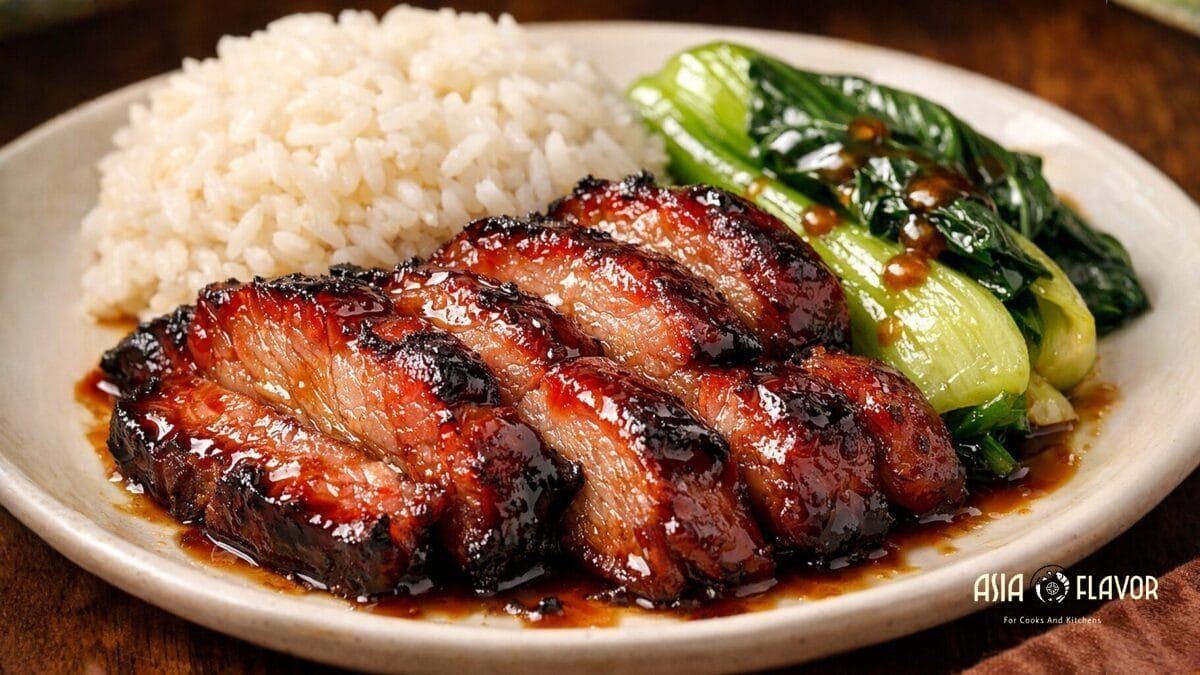
Beyond the Main Course: Complementary Side Dishes
Char Siu is incredibly versatile and pairs well with a variety of accompaniments. Think of these as supporting actors that elevate the leading role of the Char Siu.
Classic Pairings: Rice and Noodles
- Steamed White Rice: The simplest and most ubiquitous pairing. The plainness of white rice provides a neutral canvas, allowing the rich flavors of the Char Siu to shine. The rice also absorbs the savory juices.
- Egg Noodles (Lo Mein or Wonton Noodles): Char Siu is frequently served over stir-fried egg noodles, often with a light soy-based sauce and some stir-fried vegetables. The noodles provide a contrasting texture and another layer of carbohydrate.
- Congee: For a comforting, savory breakfast or light meal, Char Siu slices are a popular topping for congee (rice porridge), adding a burst of flavor and protein.
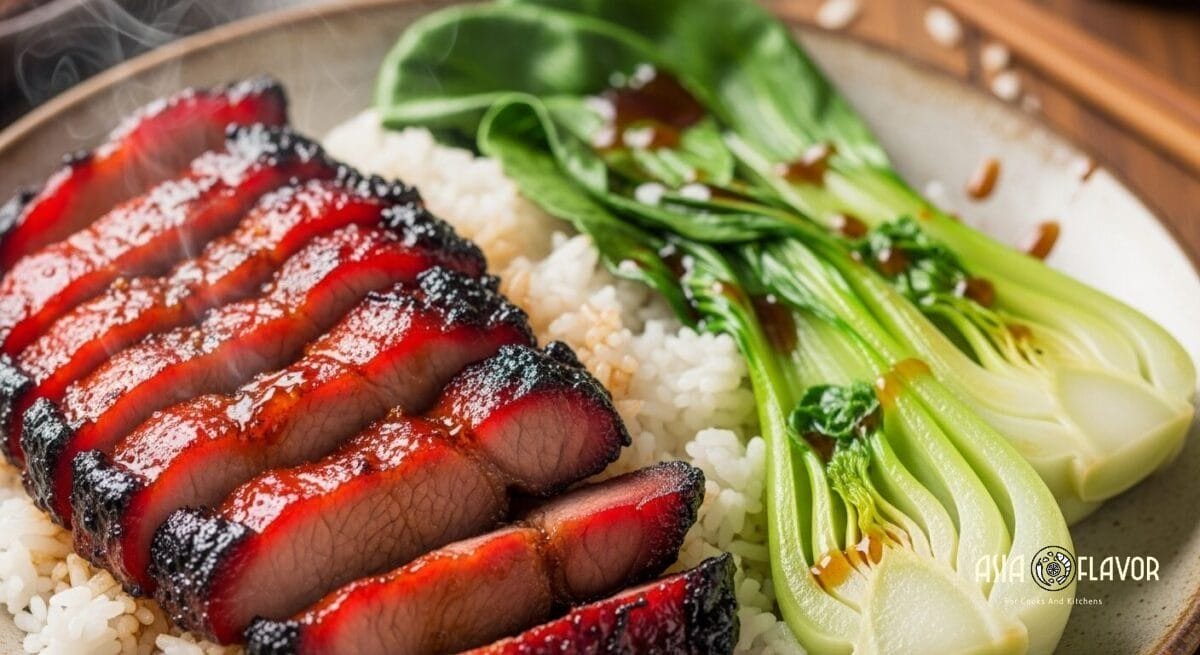
Enhancing the Experience: Vegetables and Condiments
- Blanched Choi Sum or Gai Lan: These vibrant Chinese greens, often lightly blanched and drizzled with oyster sauce, offer a refreshing contrast to the richness of the pork. Their slight bitterness and crisp texture provide a palate cleanser.
- Stir-fried Vegetables: A medley of stir-fried vegetables like bok choy, bell peppers, snow peas, or mushrooms can be a delightful accompaniment, adding color, nutrients, and varying textures.
- Pickled Radishes or Cucumbers: The tartness of pickled vegetables offers a sharp counterpoint to the sweetness of the Char Siu, cutting through the richness and refreshing the palate.
- Chili Oil or Sriracha: For those who enjoy a bit of heat, a drizzle of chili oil or a dollop of Sriracha can add an extra layer of complexity and a spicy kick.
- Reserved Char Siu Sauce: The leftover marinade, cooked down to a thick, glossy sauce, makes an excellent accompaniment for drizzling over the Char Siu and rice.
A World of Flavor: Regional Variations of Char Siu
While the fundamental principles remain consistent, Char Siu exhibits subtle regional variations that reflect local preferences and available ingredients. These variations are like dialects within a culinary language.
Cantonese Char Siu: The Gold Standard
The recipe described above is largely based on the classic Cantonese style of Char Siu. It is characterized by its bright red color (often enhanced by fermented bean curd or red food coloring in commercial preparations), sweet-savory balance, and glossy, slightly sticky glaze. The preference is usually for a tender, juicy texture with good caramelization on the edges.
Malaysian and Singaporean Char Siu: Darker and Richer
In Malaysia and Singapore, Char Siu tends to be darker and often slightly sweeter than its Cantonese counterpart. The use of more dark soy sauce and often a greater proportion of honey or maltose contributes to this deeper hue and intensified sweetness. You might also find a more pronounced wok-hei flavor (the smoky essence imparted by high-heat stir-frying) if cooked in a wok. The cut of pork may also lean towards fattier belly for a more unctuous result.
Hong Kong Roast (Siu Mei) Shops: A Visual Feast
In Hong Kong, Char Siu is a star of the Siu Mei (Cantonese roasted meats) shops. Here, you will see whole slabs of glistening pork hanging in windows, often alongside roast duck and crispy pork belly. These establishments often employ specialized ovens that allow for precise temperature control and ventilation, contributing to a particularly crisp exterior and succulent interior. The sauces and glazes are meticulously crafted and often guarded family secrets. The visual spectacle itself is part of the culinary experience.
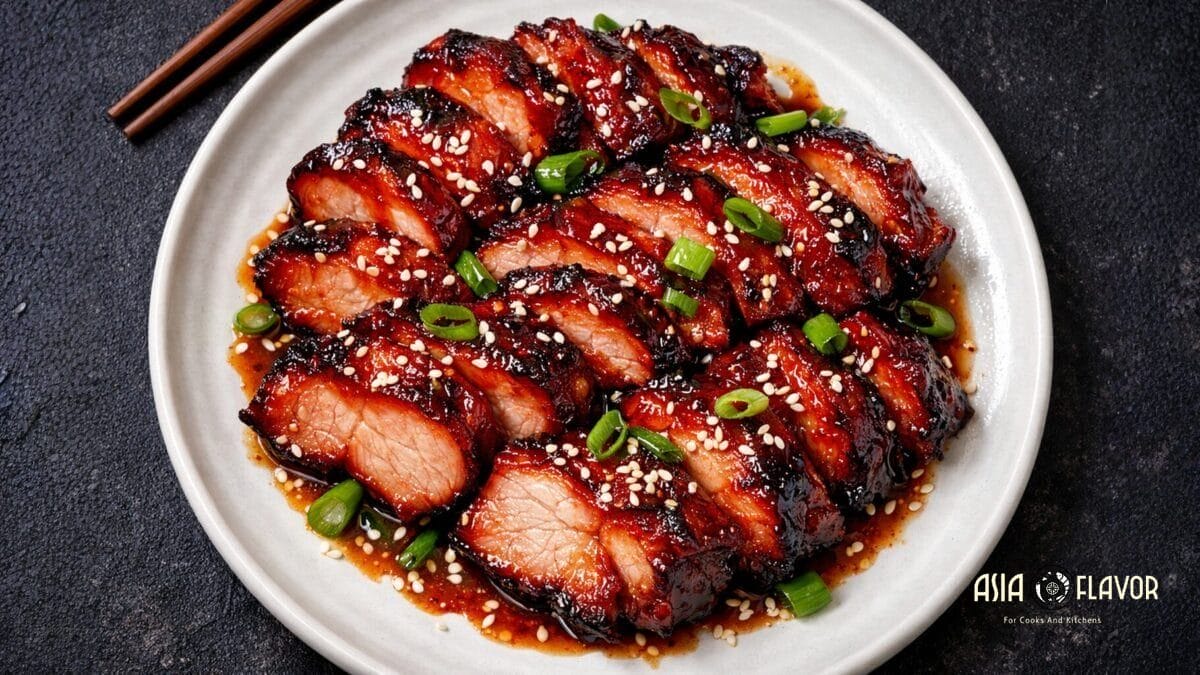
Beyond the Roast: Char Siu’s Culinary Adaptations
Char Siu’s appeal extends beyond a mere roasted meat dish. Its distinctive flavor makes it a versatile ingredient in various Chinese dishes:
- Char Siu Bao (Pork Buns): Diced Char Siu forms the savory filling for these renowned steamed or baked buns.
- Char Siu Fan (Pork Rice): Char Siu served over rice, often with a fried egg and a drizzle of sauce, is a popular, quick meal.
- Wonton Noodle Soup: Slices of Char Siu are a common topping for wonton noodle soup, adding a layer of flavor and texture.
- Fried Rice: Chopped Char Siu is a fantastic addition to fried rice, lending its sweet-savory profile to the dish.
In conclusion, crafting your own Char Siu is a rewarding culinary endeavor that brings the authentic flavors of Cantonese cuisine into your home. By understanding the critical role of each ingredient, mastering the cooking techniques, and appreciating its regional variations, you can create a dish that is not only delicious but also a testament to your growing culinary expertise. Enjoy the journey of transforming humble pork into this iconic, delectable masterpiece.
FAQs
What is Char Siu BBQ Pork?
Char Siu BBQ Pork is a popular Cantonese dish made by marinating pork in a sweet and savory sauce, then roasting it to achieve a tender, flavorful, and slightly caramelized exterior.
What ingredients are typically used in Char Siu marinade?
The marinade usually includes hoisin sauce, soy sauce, honey or sugar, Chinese five-spice powder, garlic, and red fermented bean curd or red food coloring to give the pork its characteristic red color.
Which cut of pork is best for making Char Siu?
Pork shoulder or pork butt is commonly used because it has enough fat to stay moist and tender during roasting, but leaner cuts like pork loin can also be used for a leaner version.
How long should Char Siu pork be marinated?
For best flavor, the pork should be marinated for at least 4 hours, but preferably overnight, to allow the marinade to fully penetrate the meat.
What is the best way to cook Char Siu BBQ Pork?
Char Siu is traditionally roasted in an oven or grilled over high heat, often basted with the marinade during cooking to create a glossy, caramelized finish. Cooking times vary depending on the thickness of the pork but generally range from 25 to 40 minutes.


