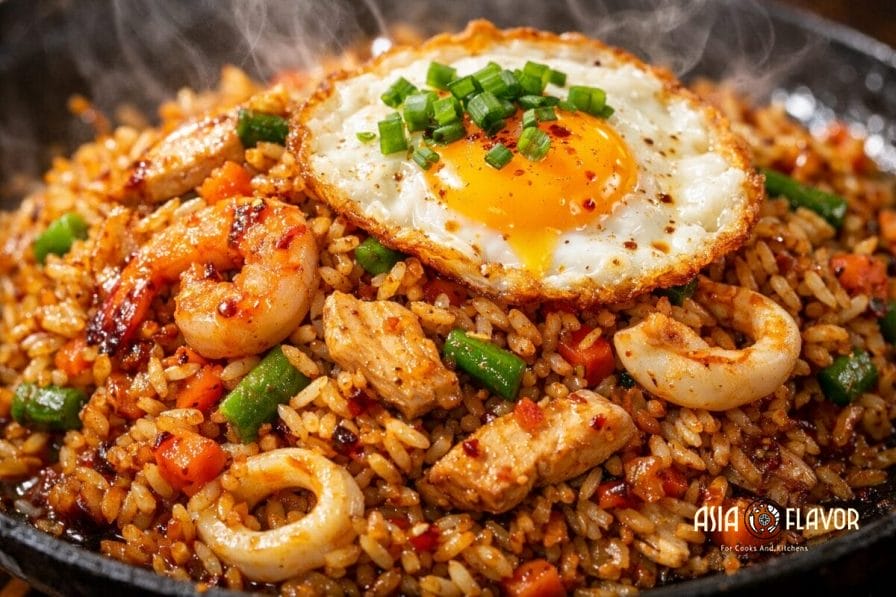
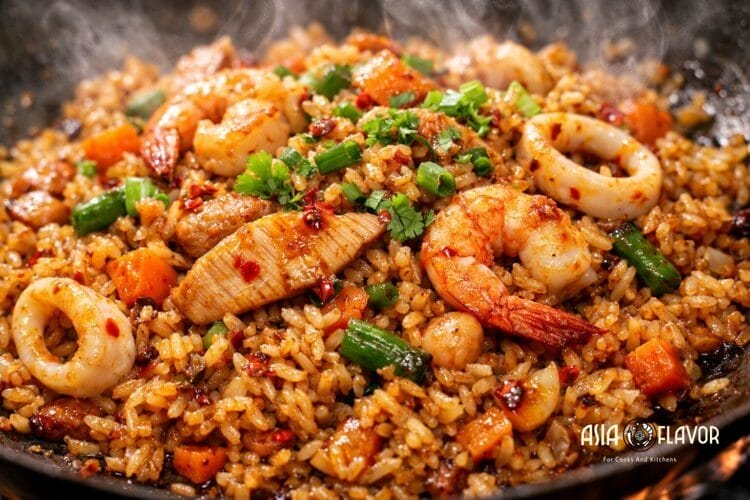
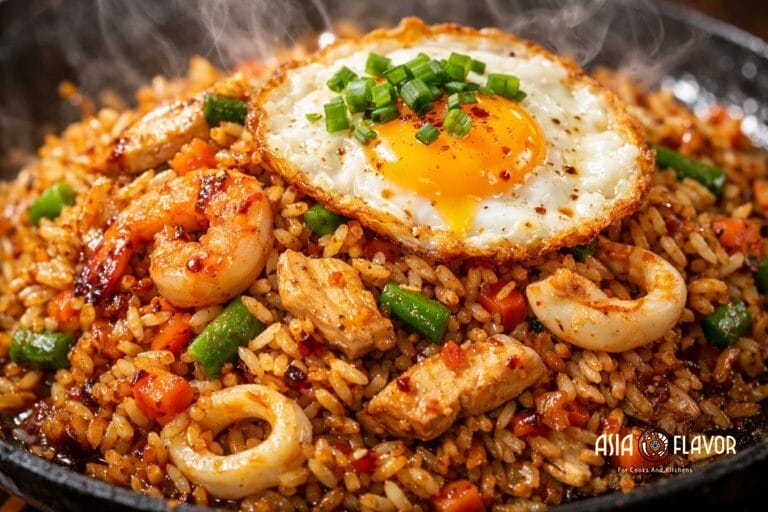
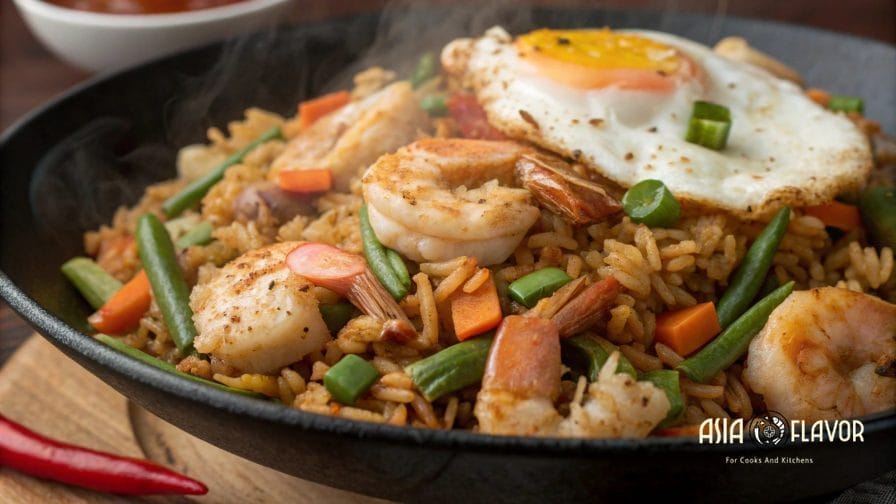
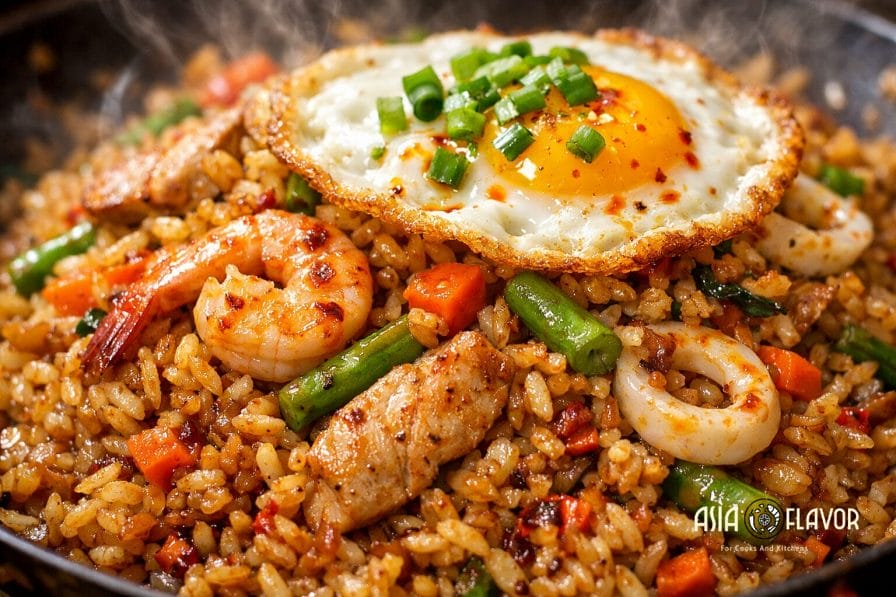
Nasi goreng USA is an acronym for udang, sotong, ayam, which translates into shrimp, squid and chicken. While most folks recognize it for its spicy, savory taste and tender bite, chefs typically serve it with a side of cucumber and tomato slices. To demonstrate how you can make it at home, the following section provides easy steps.
Nasi Goreng USA Ingredient Types
Nasi goreng USA (udang) is famous for its signature trio of proteins – udang, sotong and ayam. These three meats provide the name and a distinct mix of textures to the dish. We always use cold, day-old white rice to ensure the grains remain separate and don’t get mushy when fried. This is a smart move. A lot of Southeast Asian kitchens utilize day-old, leftover rice, which is more flavor receptive than freshly steamed rice.
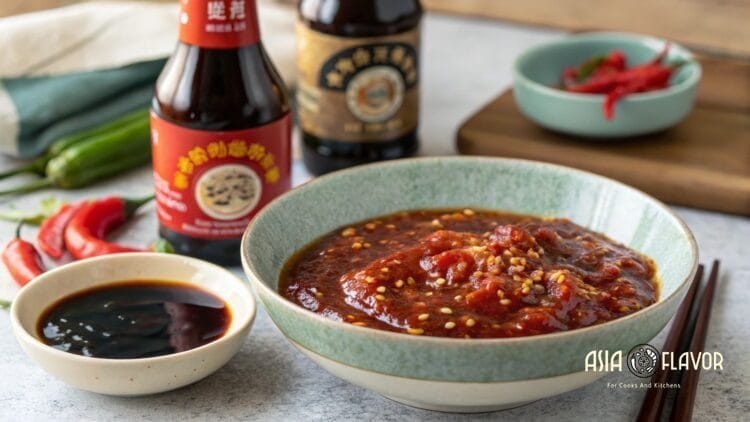
The soul of this fried rice is from a spicy blend of aromatics and spices. These are pounded or blended to create a paste for depth and heat. I often see riffs using whatever is available, but the foundation is always these essential aromatics.
- Shallots, peeled and sliced or roughly chopped
- Garlic, peeled and minced
- Red chilies or chili paste, such as sambal oelek or homemade.
And then additional aromatics can be added depending on your taste if
- Fresh ginger, grated or sliced (optional)
- Lemongrass, bruised or finely chopped (optional for more fragrance)
- Galangal, thinly sliced (optional but adds an earthy note)
- Candlenut or macadamia (optional; for body and mild flavor)
- Dried shrimp paste (belacan) and toasted (optional if you want even more umami punch)
Nasi Goreng USA Sauces
Sauces are a huge part of this dish’s personality.
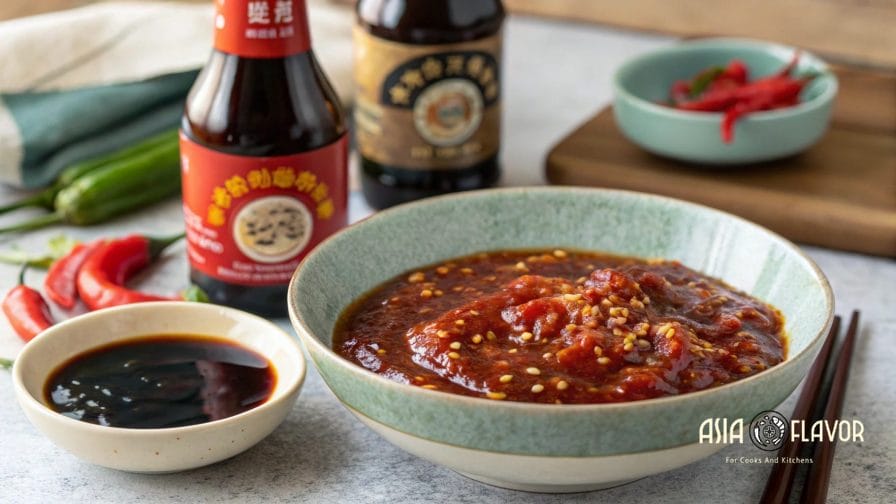
- Light soy imparts salt and umami,
- Oyster sauce lends sweetness and a savory note.
- Tomato ketchup or tomato sauce is a must for a touch of sweetness and the red tinge that’s the Malaysian and Indonesian touch.
- Black soy sauce is used sparingly, mostly for coloring (optional)
- White pepper is often used in preference to black for its gentle heat (I like heat so my recipe contains black pepper – you can swap it out if you prefer).
- We don’t use a lot of salt and a squeeze of lime at the end enhances the entire plate.
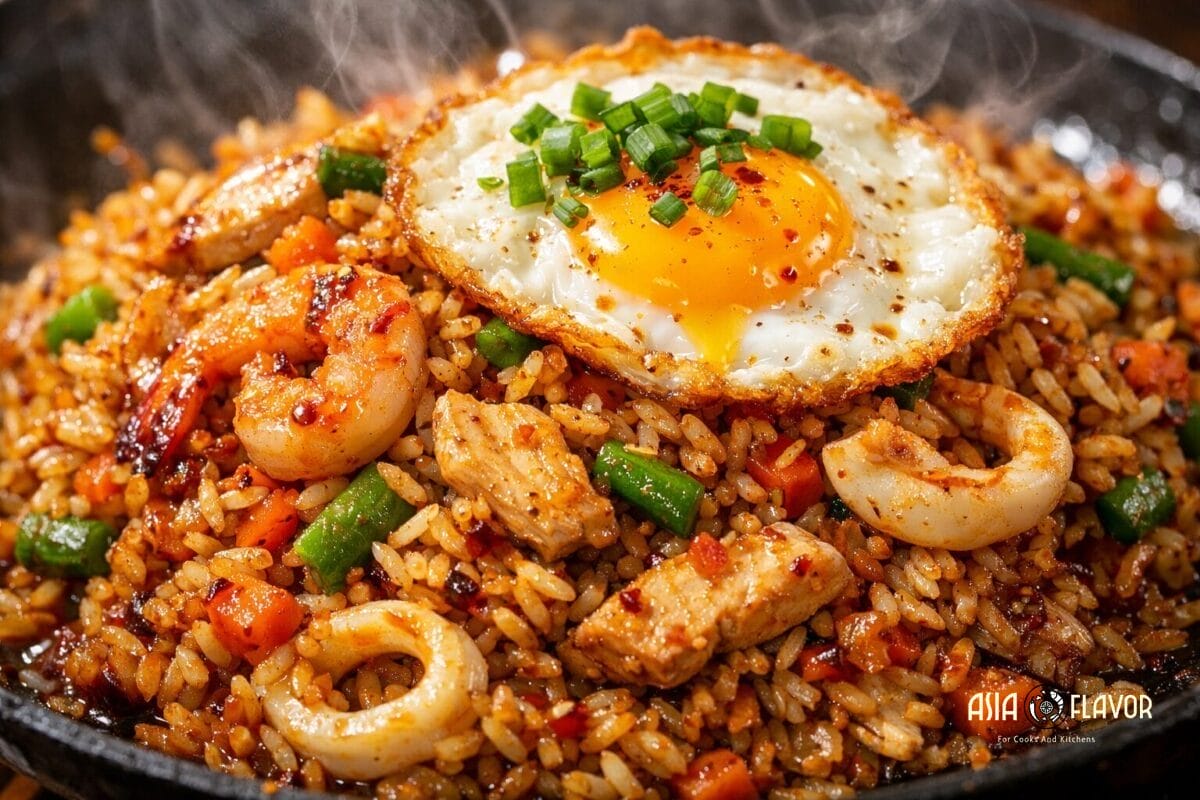


Nasi Goreng Udang, Sotong, Ayam
4
servings30
minutes40
minutes300
kcal1
hour10
minutesA delightful Indonesian fried rice dish with shrimp, squid, and chicken, perfect for a satisfying meal.
Keep the screen of your device on

Ingredients
2 cups 2 cup cold cooked rice
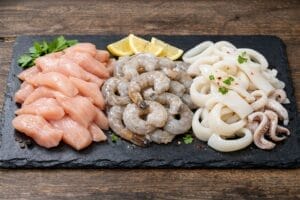
200 grams 7 oz shrimp, peeled and deveined
200 grams 7 oz squid, cleaned and sliced into rings
200 grams 7 oz chicken breast, sliced
2 tablespoons 2 tbsp vegetable oil
- Aromatics and Vegetables
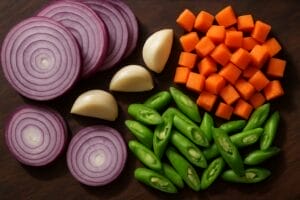
1 large 1 large onion, chopped
3 cloves 3 cloves garlic, minced
1 1 carrot, diced
10 10 green beans
- Sauce
2 tablespoons 2 tbsp light soy sauce
1 tablespoon 1 tbsp oyster sauce
2 tablespoons 2 tbsp chili paste
1 teaspoon 1 tsp sesame oil
1 tablespoon 1 tbsp ketchup
- Serve (Optional)
1 teaspoon 1 tsp salt
1 teaspoon 1 tsp black pepper
2 stalks 2 stalks scallions, sliced
1 1 tomato, sliced
1 1 cucumber, sliced
100 grams 3 1/2 oz lettuce leaves
4 4 eggs, fried
sambal belacan

Directions
- Prep Work
- Peel onion and garlic cloves, crush garlic and slice the onion. Peel and scrub the carrot and cut in into small cubes, top and tail the beans and slice into pieces. Clean the shrimp and squid, if not bought prepared. Slice the squid into rings. Slice the chicken breast into bite sized pieces.
- Cooking
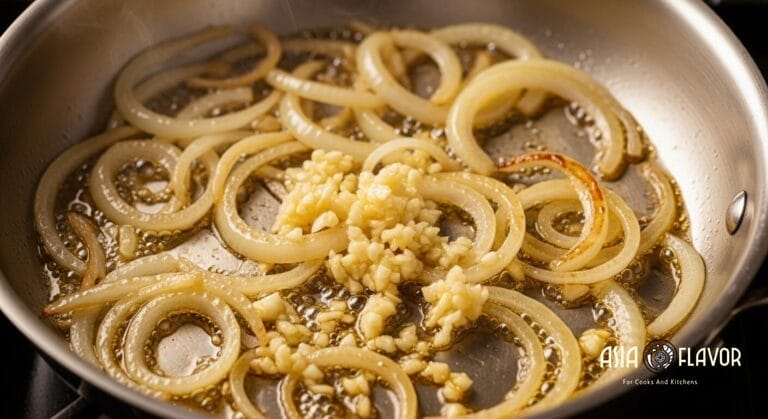
- Heat the vegetable oil in a large pan over medium heat. Add the chopped onion and minced garlic, sauté until the onion is translucent and the garlic is fragrant.

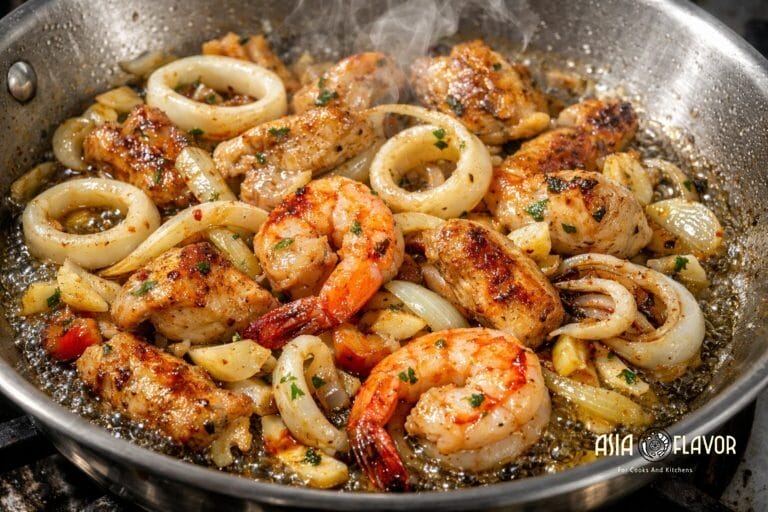
- Add the chicken slices to the pan, cooking until they are browned on all sides and almost cooked through, approximately 5 to 7 minutes. Introduce the shrimp and squid to the pan, cooking them together with the chicken until the shrimp turn pink and the squid is opaque.

- Combine the soy sauce, oyster sauce, ketchup, sesame oil and chili paste in the pan. Stir well to coat other ingredients fully with the sauce mixture.

- Stir in the cooked rice, breaking up any clumps with a spatula. Mix thoroughly with the seafood and chicken for even distribution. Raise the heat to high and continue stirring, ensuring the fried rice is heated through.

- Fry the eggs and place a fried egg on each serving. Garnish with sliced scallions, lettuce, and slices of tomato and cucumber before serving.

Equipment



Notes
- Add more of less of the chili depending on your preference
- You can replace squid with additional shrimp
- Also tasty with leftover fried chicken
Nutrition Facts
- Serving Size: 100g
- Total number of serves: 1
- Calories: 250kcal
- Fat: 10g
- Saturated Fat: 2g
- Trans Fat: 0g
- Polyunsaturated Fat: 1g
- Monounsaturated Fat: 3g
- Cholesterol: 30mg
- Sodium: 150mg
- Potassium: 300mg
- Carbohydrates: 30g
- Fiber: 4g
- Sugar: 10g
- Protein: 5g
- Vitamin A: 500IU
- Vitamin C: 60mg
- Calcium: 200mg
- Iron: 5mg
- Vitamin D: 2mg
- Vitamin E: 3mg
- Vitamin K: 20mg
- Thiamin: 0.5mg
- Riboflavin: 0.3mg
- Niacin: 4mg
- Vitamin B6: 0.4mg
- Vitamin B12: 1mg
- Folate: 40mg
- Biotin: 25mg
- Pantothenic Acid: 1.5mg
- Phosphorus: 150mg
- Iodine: 45mg
- Magnesium: 60mg
- Zinc: 2mg
- Selenium: 10mg
- Copper: 0.1mg
- Manganese: 0.2mg
- Chromium: 30mg
- Molybdenum: 15mg
- Chloride: 1000mg
Did you make this recipe? We’d love to see it!
Tag @healthynatured on Instagram and add the hashtag#asiaflavor
Like this recipe?
Follow @healthynatured on Pinterest
Join us on Facebook!
Follow Taste of Asia Flavor on Facebook
Serving Suggestions
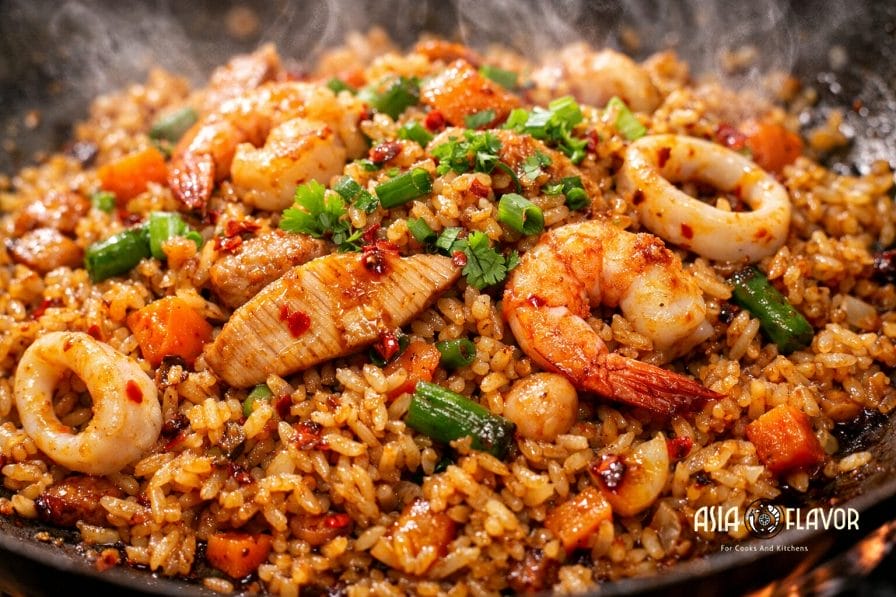
Nasi goreng USA is a dish that stands out with its bold flavors, and how you serve it can make a big difference in the dining experience. In Malaysia, particularly at hawker stalls, presentation is utilitarian and colorful. It is commonly served in a warm bowl and topped with a fried egg (telur mata sapi). Leave the egg yolk runny or cook through for a minute or two by covering the pan with a lid.
On top, a sprinkling of crispy fried shallots adds texture and a nutty aroma. Chopped coriander, celery, and green onion are fresh, aromatic garnish options. To add color and crunch, sliced cucumber, tomato, and lettuce are served on the side. Wedges of lime, squeezed in just before eating, brighten up the dish and balance the richness.
A little bowl of soup is often served alongside to round out the meal. Light choices are best, such as a lemongrass clear broth prepared with chicken stock or a gentle Indonesian soto ayam. These soups refresh the palate and offer a subtle contrast to the bold, savory accents of the fried rice. For home use, any clear broth with fresh herbs will suffice and helps make the meal feel more finished.
Condiments are half the fun! Everyone likes to mix and match to suit their own taste. Here is a quick list of popular add-ons:
- Sambal (chili paste)
- Sweet soy sauce (kecap manis)
- Spicy beef gravy or curry sauce
- Pickled vegetables (acar)
- Fried shallots or onions
For any larger spread, sides are a must. Fried chicken wings are my personal favorite, as their crisp skin and juicy meat pair well with the rice. Perkedel, or potato patties, provide a comforting side with a subtle flavor that is loved by all ages. Quick-stirred kangkong, or water spinach, adds a leafy green and absorbs sauces well. Others like to present a plain plate of mixed salad leaves dressed lightly in lime juice or rice vinegar for a palate-invigorating nibble between each mouthful of rice.
Nasi goreng is elastic with proteins. Shrimp is classic, and chicken, beef, and even tofu or tempeh can be swapped in. It’s not uncommon to find a duo or trio of proteins, particularly at the family table or holiday celebrations. This dish is highly customizable, so add and subtract toppings and sides to your liking.
Tips and Variations
Nasi goreng USA is a staple at Malaysian mamak warungs. The name is a playful shorthand found in local menus: “USA” stands for Udang (shrimp), Sotong (squid), and Ayam (chicken)—not the United States. This shortcut, typical of Malay, suggests Western impact primarily in the moniker. It’s a feast in and of itself, typically featuring a cake of fried rice, sambal, and a hodge-podge of proteins or vegetables. Because it’s so versatile, it’s extremely popular and comes in all variations across Malaysia, Indonesia, and even further.
- Switch up the proteins based on preference or availability. Shrimp can be substituted with sliced chicken breast or thigh, calamari rings, or beef strips. For a more flavorful experience, add some bits of mutton or goat, ala Betawi-style nasi goreng kambing in Jakarta. If you prefer a vegetarian option, tofu cubes or tempeh stand up well and absorb all those flavors. Check cooking time to make sure each protein is cooked through but remains juicy. For fast preparation, pre-cooked or leftover meats are fine and make things come together more quickly.
- Spice levels are adjustable. Add additional bird’s eye chilies for heat, or retreat for a more mild plate. Sambal belacan, a spicy shrimp paste, can be swirled in while frying or served on the side. For a smokier fragrance, add a pinch of toasted belacan or a dash of black pepper for a modern touch. For busy people, instant nasi goreng paste from local brands imparts an easy flavor kick. Simply stir it in with the rice as it fries.
Regional variants are simple to sample if you’re after different flavor profiles. For a kampung-style plate, hit it with some ikan bilis and extra fresh chilies for that rustic, spicy crunch. For those who don’t like their flavors too heavy, nasi goreng cina replaces the robust soy with light soy sauce and adds more vegetables such as carrots, peas or cabbage.
Nasi goreng belacan is bolder, with the addition of extra shrimp paste for greater depth, while nasi goreng kunyit utilizes turmeric for its earthy color and aroma. All of these are charming in their own way and can be customized to what you have in your cupboard.
Seafood lovers can go for a sotong masak hitam–inspired variation with the addition of squid ink or ink sacs for an intense inky hue. Others prefer to finish it with a black pepper sauce to complement the sweetness of the seafood. If you’re feeling noodles over rice, swap in flat rice noodles (kwetiau goreng) or thin vermicelli (bakmi goreng). They both absorb the sauce and spices deliciously and provide a textural variation.
Toppings and sides influence the ultimate plate. Most nasi goreng are served with a fried egg, cucumber and/or tomato slices or salad leaves for freshness. Chili sauces and sambal belacan give it a spicy kick. These options make every plate feel special, and they show how nasi goreng is enjoyed throughout Southeast Asia from home cooking to chain dining. With so much flexibility, it’s a cinch to customize this meal to your own palate.
Storage and Reheating
Rapid cooling is essential for food safety and to maintain flavor. Once the rice is cooked, spread it out on a tray or wide plate to cool faster, then transfer to shallow, airtight bowls within two hours. If you cool rice too slowly, it can allow bacteria to grow, so don’t leave it out overnight.
For seafood nasi goreng, refrigerate up to 2 to 3 days. Chicken versions keep 3 to 4 days. For more extended storage, freezing does the trick—simply portion in freezer-safe containers and they will last for up to two months, with the usual slight textural variations post-thaw. Depending on what you are making, always use shallow containers because they help speed cooling, which prevents off-flavors and keeps rice safer to eat.
Reheating nasi goreng usa (udang) is best in a wok or large skillet over medium-high heat. Drizzle with some oil or a few tablespoons of chicken stock to keep the rice from drying out. Fry-stir until steaming hot and a little crisp around the edges, generally three to five minutes.
Try to heat it evenly, ensuring that the rice is a minimum of 165°F (74°C) to avoid food poisoning. You can microwave it, but it is typically uneven; the rice gets dry or mushy and there are cold spots. If microwaving, cover loosely and stir midway for best results. Other times, when reheated, nasi goreng gets dry and crumbly. A splash of broth or sauce helps add back flavor and moisture.
Once reheated, brightening up the rice with easy garnishes can enhance the entire dish. Sprinkle in chopped green onion, a handful of fresh coriander, or a squeeze of lime juice right before serving for a burst of freshness. A spoonful of sambal oelek or chili paste adds heat, and the addition of newly fried eggs or crispy fried shallots returns some of that freshly-made texture. Do not store or freeze with cucumber or tomato slices—they go mushy; add them fresh at the table!
Let’s sidestep a few traps to ensure your nasi goreng usa remains safe and delicious. Never reheat leftovers more than once because continuously cooling and heating food can cause spoilage and food safety issues. Don’t ever freeze or store fried eggs alongside the rice because the eggs become rubbery and have a weird taste when they defrost. Don’t let cooked rice sit out for too long, even if you’re going to reheat it, as this can cause bacteria to grow and change the taste.
Conclusion
Nasi goreng USA – Quick steps, easy ingredients, and big flavor. The shrimp gives it a sweet bite, the rice soaks up all those sauces and the eggs complete the picture. Try extra veg or switch out for chicken or tofu if you like. Leftovers keep well and warm up quickly for hectic days. A bowl of this rice really hits the spot for lunch or a late-night snack. For a quick weeknight dinner or a crowd, it does the trick. Send your twist to friends or keep it your signature. Looking for something else quick and delicious or a little old favorite with a twist? See more recipes and let us know.